When the Port Becomes a Platform
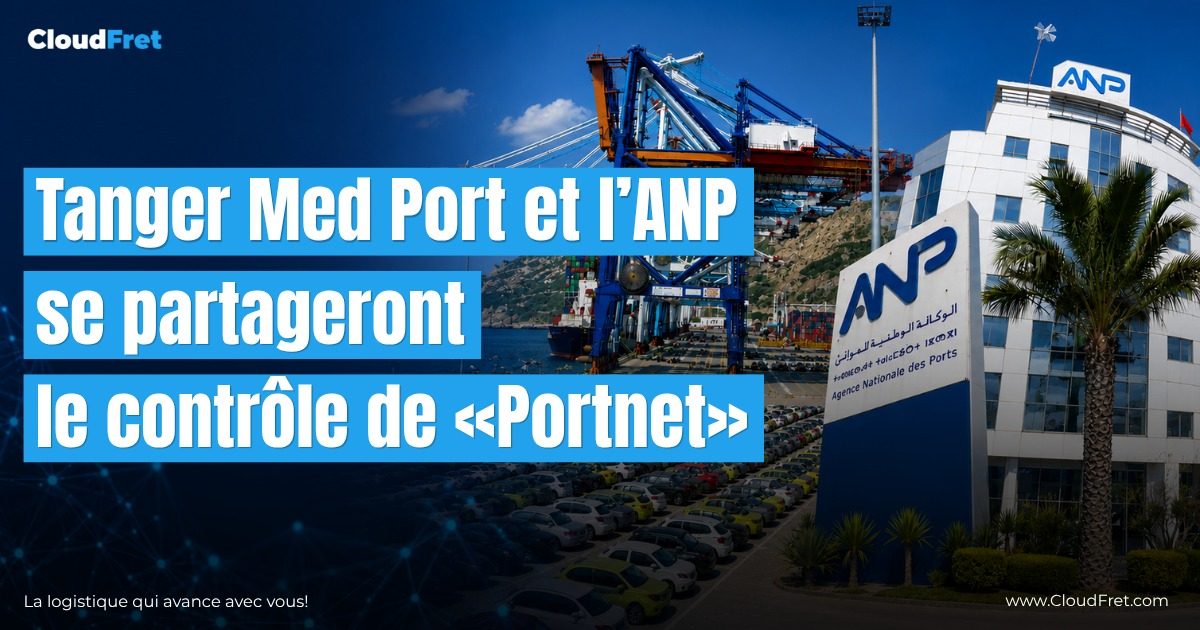
Some financial transactions read like mere lines in a press release; others, if you take the time to look at them closely, tell the story of an entire sector at a turning point. Tanger Med Port Authority’s acquisition of a stake in PortNet belongs to the second category.
Two Moves, One Direction
The facts are now public: the Competition Council has been notified of a plan under which the operator of Africa’s largest port complex would take a little over 44% of PortNet, alongside the National Ports Agency (ANP), to exercise joint control over it. PortNet is the national single window for foreign trade formalities — in other words, the digital nervous system through which all the procedures surrounding a shipment pass, for imports and exports alike. At the same time, the ANP itself is completing its transformation into a public limited company under the name Ports du Maroc. The champion of physical infrastructure and the regulatory backbone of foreign trade are modernising together, in the same direction.
Concrete Is No Longer the Name of the Game
For years, we thought about logistics competitiveness in terms of concrete, cranes, quays and kilometres of motorway. And Tanger Med’s figures are dizzying: more than 11 million TEUs handled in 2025, up 8.4%, and more than 535,000 TIR trucks, with growth driven by our industrial and agri-food exports. Morocco’s physical infrastructure has become a world-class reality.
But when the champion of that infrastructure decides that its next strategic move is not to pour another quay but to take control of the digital single window for foreign trade, it is sending us a signal we need to hear. The bottleneck in logistics is no longer the quay: it is at the interface. Today, a container no longer waits because a crane or a truck is missing; it waits because information flows poorly, because the players are not synchronised, because visibility is lacking at the very moment a decision has to be made. The next frontier of competitiveness will not be decided by metres of quay, but by the fluidity of whatever connects the players to one another.
The Layer the State Will Not Build for Us
That is precisely the conviction on which we built CloudFret. We do not move containers: we synchronise the people who move them. The single window digitalises the regulatory relationship between operators and the State, and that is a considerable step forward. But one layer remains to be built, and the State will not build it for us: the day-to-day coordination between the thousands of shippers, carriers and service providers who make the flow a reality every day. Capacity transparency, matchmaking, execution — that ground is ours.
A Consolidation That Opens More Than It Closes
One could read this national consolidation as a door closing on private players. We read exactly the opposite. Every step towards digitalising formalities reduces friction, standardises data and lays the tracks on which private innovation will be able to run. A more digital public logistics backbone does not compete with a more dynamic private logistics market: it makes it possible. They are two sides of the same modernisation.
Spectators or Contributors
These events must be seen for what they are: not isolated facts, but pieces of a coherent industrial strategy. Tanger Med’s performance, the reform of the ANP, the rise of PortNet: Morocco has decided to become a logistics power, and it is methodically giving itself the means to do so. The real question, for those of us who are building in this sector, is not whether this transformation will happen: it is happening. The question is whether we will be its spectators or its contributors.
The port is becoming a platform. The State is laying the tracks. It is up to us to build what will run on them. That is the task of the years ahead, and there is probably no more exciting time than today to be an entrepreneur in Moroccan logistics.
Related Articles:
- Reopening the Strait of Hormuz: What Will Really Happen to Oil and Freight?
- Nador West Med 2026: What Morocco’s Second Deep-Water Port Changes for Logistics Between Europe and Africa
- CloudFret Featured in Challenge.ma: Five Years Reshaping Road Freight Between Europe and Africa
- 80% Dependence: How Morocco Supplies Spain and Secures Europe’s Agriculture
- Hormuz Crisis: SIPORTS 2026 Drives Morocco’s Port and Logistics Transformation