80% Dependence: How Morocco Supplies Spain and Secures Europe’s Agriculture
In an increasingly unstable global context, where food security is becoming a major strategic issue, raw material supply chains play a decisive role in the international economic balance. Among them, phosphates and their derivatives hold a central place, as they directly determine agricultural production and the stability of crop yields. It is against this backdrop that the relationship between Morocco and Europe, and Spain in particular, is taking on a growing strategic dimension, revealing the Kingdom’s importance in securing Europe’s agricultural supplies.
Morocco at the Heart of European Food Security
In a global context marked by geopolitical tensions, supply chain disruptions and growing competition for strategic raw materials, certain economic dependencies take on particular importance.
This is the case with the relationship between Morocco and Spain around phosphoric acid, a resource that is essential for fertiliser production.
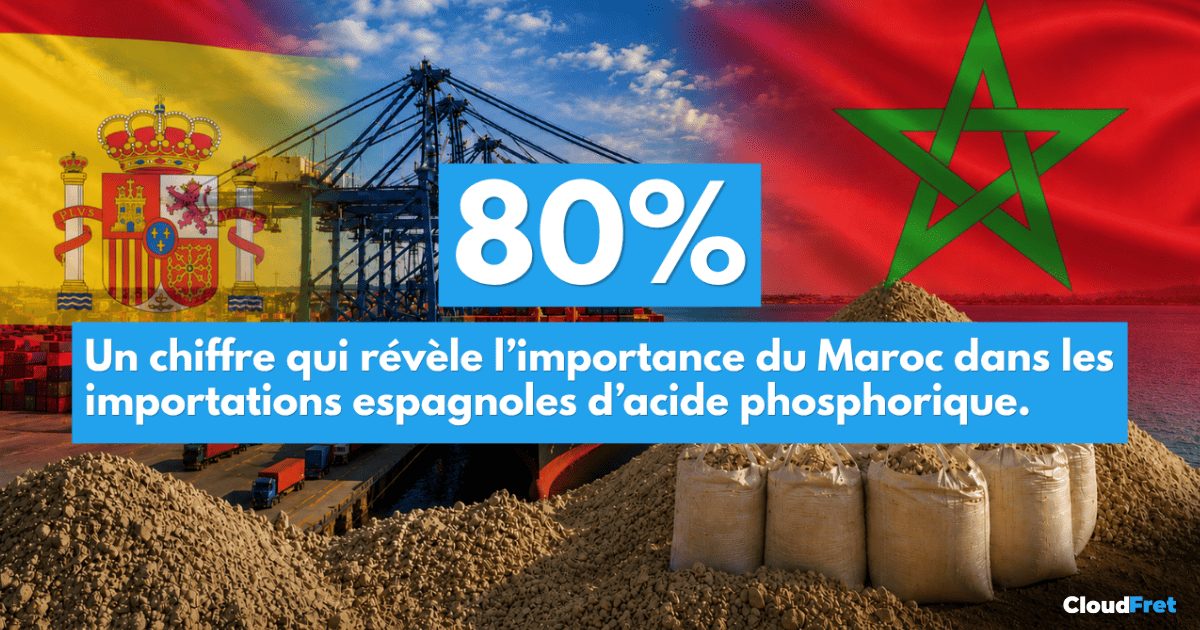
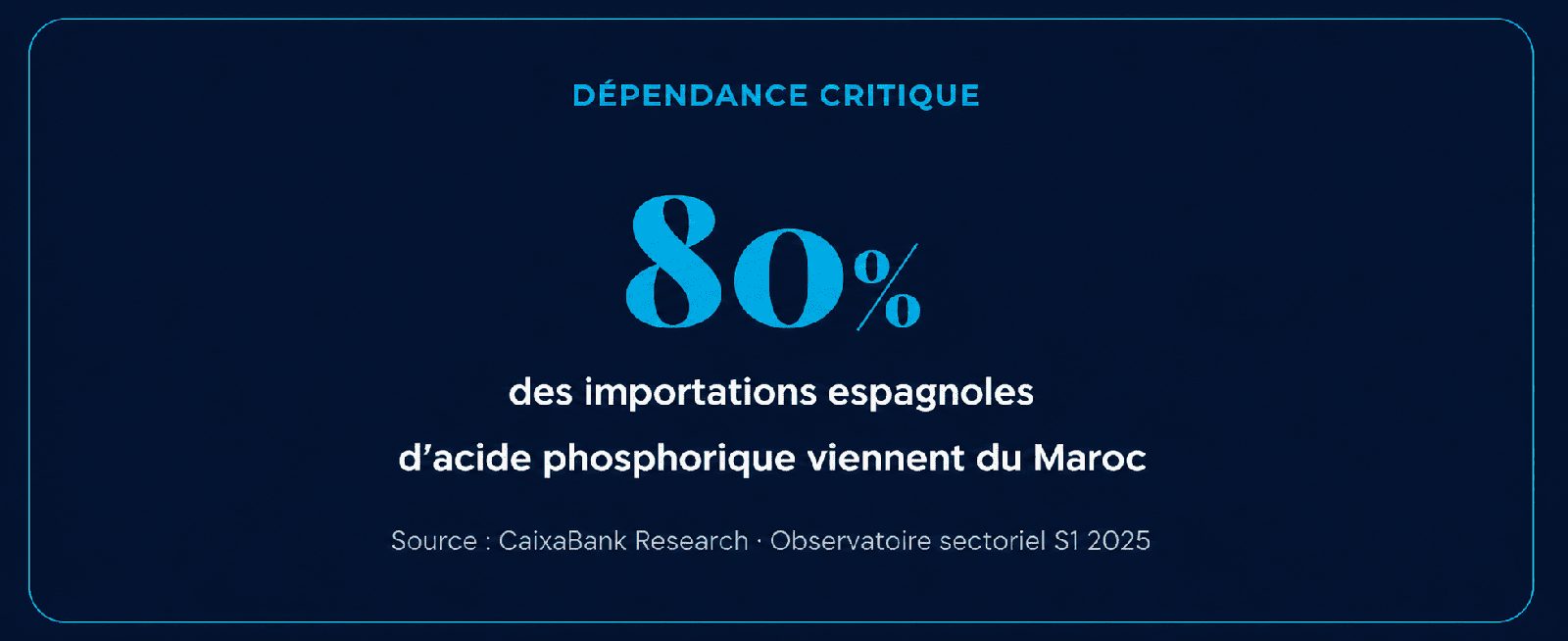
According to a study published by CaixaBank Research in 2026, nearly 80% of Spain’s phosphoric acid imports come from Morocco. This figure illustrates not only the Kingdom’s importance in the international phosphate trade, but also its growing role in European food security.
This dependence highlights a little-known reality: behind the agricultural products consumed every day lie complex logistics chains and strategic resources whose availability underpins the economic stability of many countries.
Why Is Phosphoric Acid So Important?
Phosphoric acid is an essential component in the manufacture of the phosphate fertilisers used in modern agriculture.
Without phosphorus, it becomes impossible to maintain the agricultural yields needed to meet global food demand.
This resource plays a direct role in:
- Crop fertilisation;
- Improving agricultural yields;
- The production of cereals, fruit and vegetables;
- People’s food security;
- The stability of agri-food chains.
In other words, phosphoric acid is one of the invisible yet essential links in global agricultural production.
A Dependence That Goes Beyond Mere International Trade
The CaixaBank Research study analysed more than 5,000 categories of products imported by Spain in order to identify the resources most vulnerable in the event of a supply disruption.
The researchers used several criteria:
- A high concentration of suppliers;
- Dependence on countries outside the European Union;
- A low capacity for substitution in the short term.
The result: only 46 products were considered truly critical for the Spanish economy.
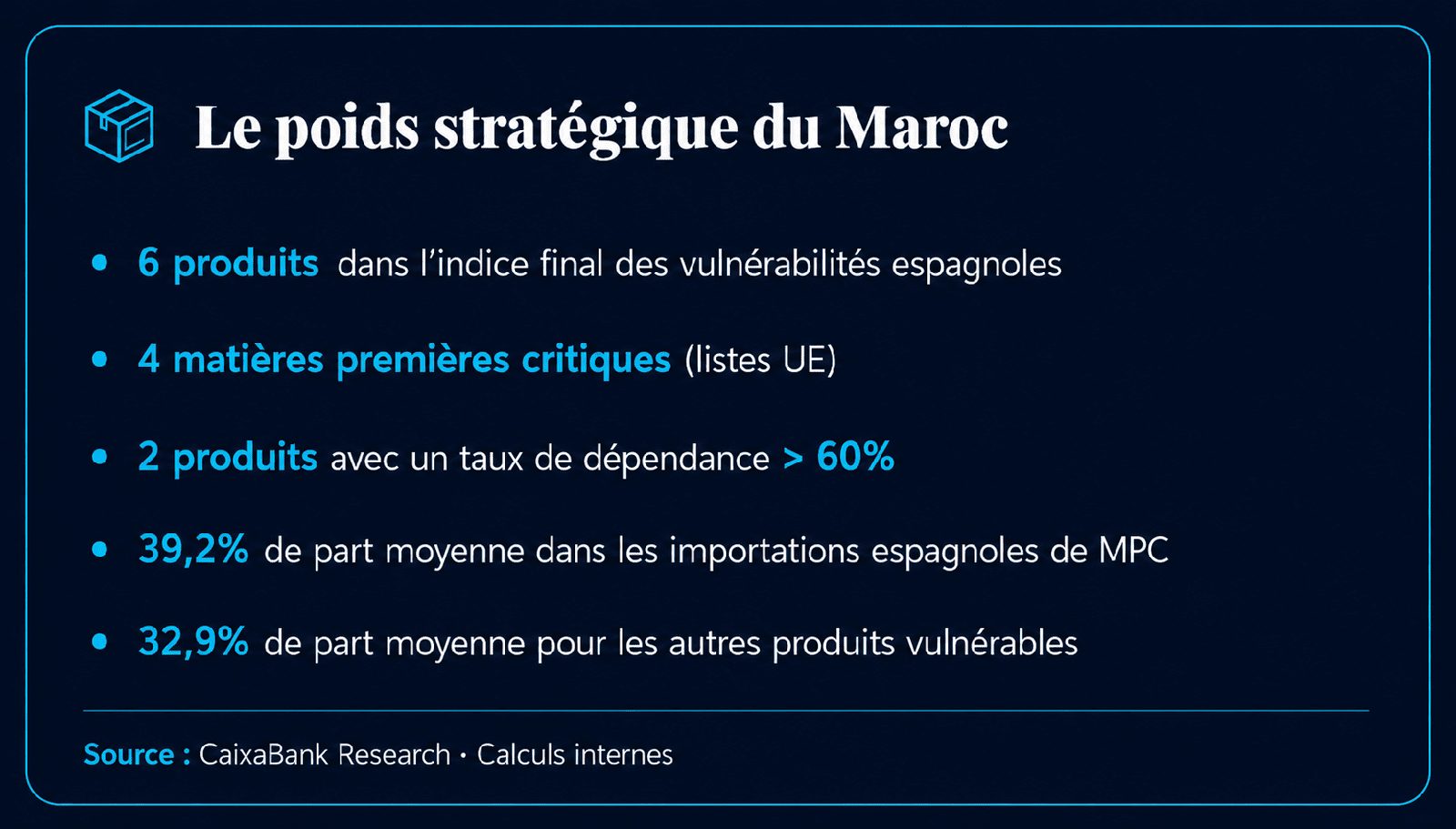
Among them are six products exported by Morocco.
Their presence confirms that the Kingdom is not just an important trading partner. It is also becoming a strategic player, some of whose resources are difficult to replace.
Moroccan Phosphates: A Major Geo-Economic Advantage
Morocco has some of the largest phosphate reserves in the world.
This natural wealth gives it a unique position in the global economy, particularly in the sectors linked to agriculture and fertilisers.
Beyond its reserves, several factors reinforce this advantage:
Integrated Production
Morocco no longer limits itself to extracting raw phosphate.
The country has gradually developed industrial capabilities that allow it to produce high value-added derivatives, notably phosphoric acid and fertilisers.
This industrial integration strengthens its competitiveness on international markets.
Strategic Proximity to Europe
Morocco’s geographical proximity to Spain is a major logistical asset.
Short transit times allow for:
- Greater supply chain responsiveness;
- Lower logistics costs;
- Better-secured trade flows.
In an environment where supply chain resilience is becoming a priority, this proximity represents a considerable competitive advantage.
Logistics and Supply Chains: A Key Issue
The study also highlights an often underestimated aspect: the importance of logistics in securing strategic raw materials.
Today, companies and governments are no longer just seeking to obtain the resources they need.
They are also seeking to guarantee:
- Continuity of supply;
- Visibility over flows;
- Resilient logistics chains;
- Control over geopolitical risks.
Moroccan phosphates illustrate this shift perfectly.
A major disruption to flows between Morocco and Spain could affect the entire agri-food chain, from fertiliser manufacturers to farmers.
Morocco Among Europe’s Strategic Suppliers
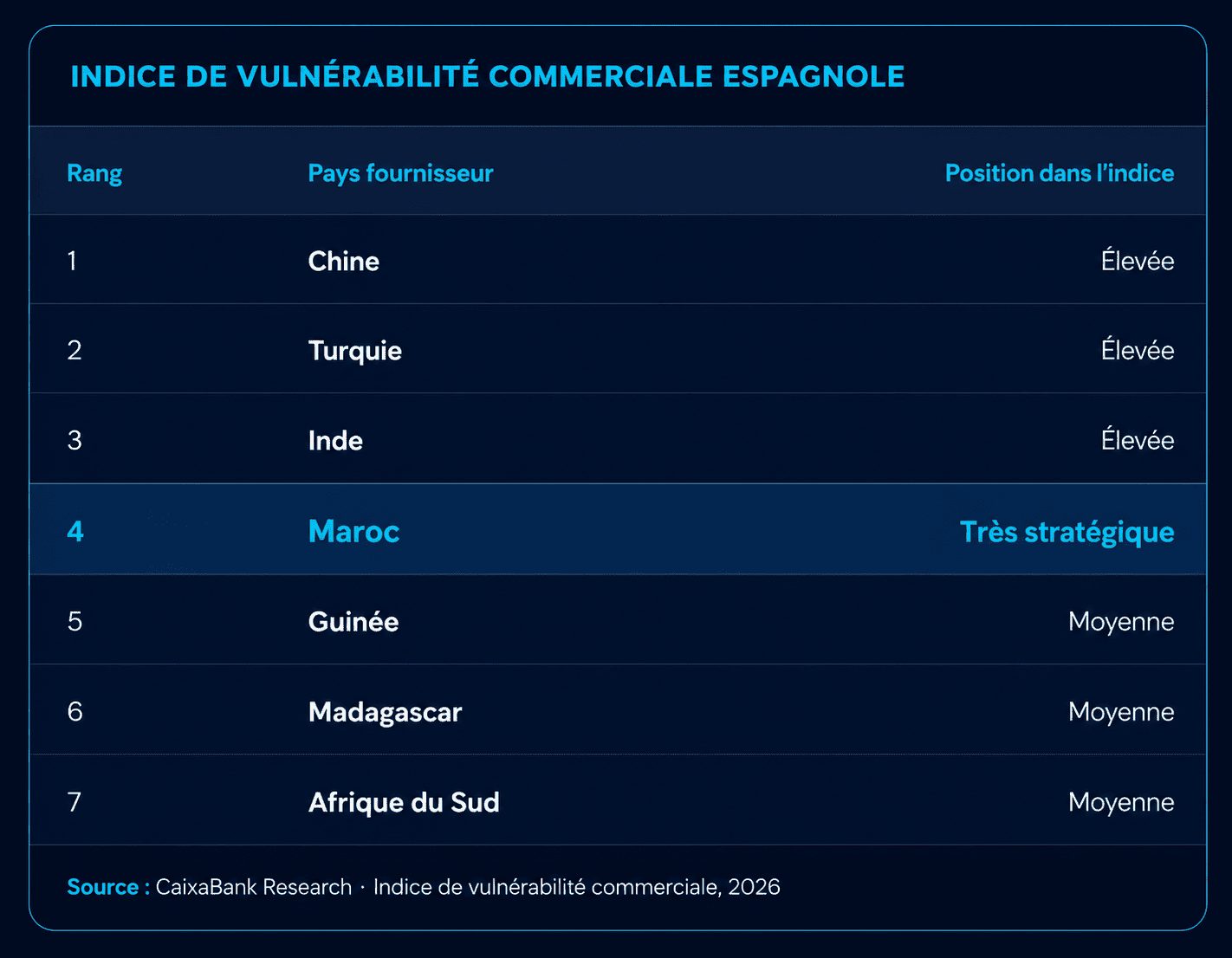
The CaixaBank Research team compares Morocco’s position with that of other countries holding resources that are difficult to replace:
- Guinea for aluminium ores;
- Madagascar for natural graphite;
- Turkey for borates.
This comparison confirms that a country’s strategic value no longer depends solely on its export volume.
It also rests on how critical the resources it supplies are.
In the case of phosphates, Morocco has now established itself as an indispensable player for several European economic sectors.
Diversification or a Stronger Partnership?
Faced with this dependence, Spanish and European decision-makers are confronted with a strategic question.
Should they further diversify their sources of supply to reduce risk?
Or, on the contrary, strengthen partnerships with reliable suppliers such as Morocco?
The debate goes far beyond the scope of international trade.
It directly concerns Europe’s economic security, food sovereignty and industrial resilience.
Key Takeaways
The CaixaBank Research study confirms an underlying trend: critical raw materials are playing an increasingly important role in the global economic balance.
A few figures illustrate this reality:
- 80% of the phosphoric acid imported by Spain comes from Morocco;
- Six Moroccan products are among the strategic resources identified by the study;
- Four of them are considered critical raw materials by the European Union;
- Moroccan phosphates contribute directly to European food security.
Beyond the figures, this situation is a reminder of the importance of logistics chains and supply networks in the global economy.
As economic sovereignty issues gain ground, the ability to secure flows of critical raw materials is becoming a key competitive factor.
Conclusion
The example of Moroccan phosphates perfectly illustrates the new realities of international trade.
In a world where strategic resources have become levers of economic power, control of supply chains is now as important as production itself.
For logistics, transport and supply chain players, these developments are a reminder of an obvious truth: tomorrow’s economic performance will depend as much on the availability of resources as on the ability to move them efficiently and safely.
Related Articles:
- Nador West Med 2026: What Morocco’s Second Deep-Water Port Changes for Logistics Between Europe and Africa
- CloudFret Featured in Challenge.ma: Five Years Reshaping Road Freight Between Europe and Africa
- CloudFret Reaches a New Milestone: 4,600+ Users in Our Community
- Morocco 2024: Key Logistics Developments Unfolding!
- Hormuz Crisis: SIPORTS 2026 Drives Morocco’s Port and Logistics Transformation
- Full Truckload (FTL) Vs. Less Than Truckload (LTL) Shipping: Which Option Should Your Company Choose?